Two of the many definitions of origin, according to dictionary.com, are “the first stage of existence; beginning,” and “ancestry; parentage; extraction.” I’ve heard of people in the genealogy world discussing “family of origin” being their set of parents, any siblings, etc, vs the family they went on to have later in life – one with a significant other and children, for example.
I could discuss my parents and my siblings, but they are all still alive and wouldn’t like being the subject of my blog quite yet. I could discuss my family members who immigrated to the United States, but there were so many, and their lives were rich and varied – and I plan on using them in later weeks, so… I am going to discuss our origins from the standpoint of DNA ethnicity, specifically AncestryDNA – which is currently on sale until the 12th of the month, if you want to buy a test and a membership to Ancestry.com.
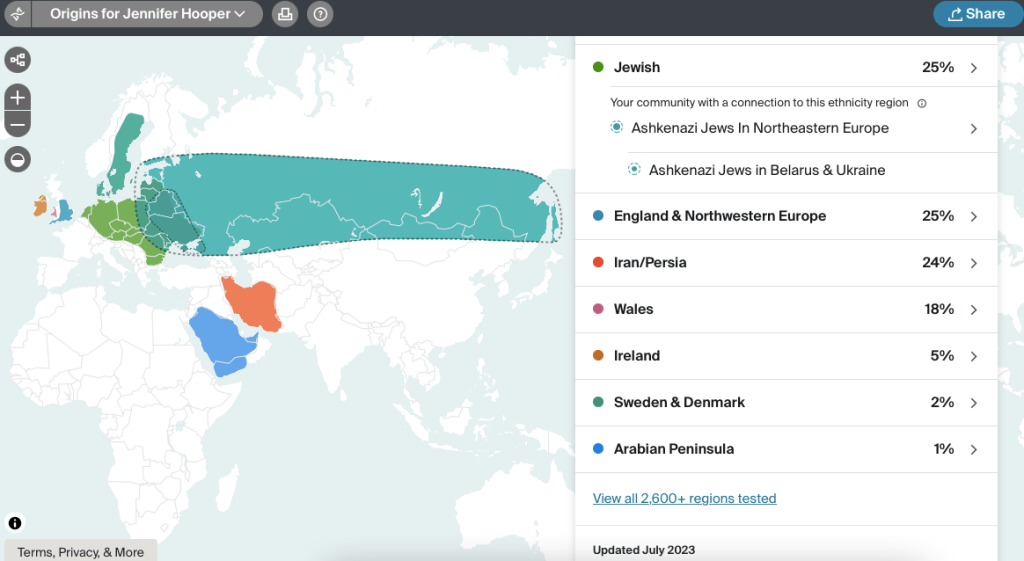
I can see my paternal grandparents clearly because they were each roughly 100% Jewish or Iran/Persia (with an interesting 1% Arabian Peninsula which increases with my DNA tested older family members, this gives me a great question to chase down). My maternal grandparents were a mix of UK and Sweden & Denmark, which made them a bit easier to research more thoroughly at a younger age.
What doesn’t show up on my AncestryDNA (nor my mother’s AncestryDNA, but does show up on her paternal Aunt’s AncestryDNA results) is “Indigenous America – North” DNA, while it shows up in a very tiny amount (for my mother as well) on my 23&me results. I have heard a rumor about where my Indigenous American results come into the line, but I do not have specific proof yet so I cannot say for certain. I look forward to researching this DNA question in more detail soon.
If you haven’t tested your DNA, it’s a great way to consider what to research “next.”
 No Ancestor Left Behind